
I’ve known the works of Nils Franke since 2016, when we exhibited together at the Agra Café during WGT. Unfortunately, we didn’t meet in person back then. All the more wonderful to have the chance to ask him a few questions now.
Hello Nils, thank you for taking some time for us. In my opinion, you’re an artist who likely polarizes quite strongly. Your works are sometimes dark and sad. Would you describe yourself as a “dark artist”? How would you define the style you work in?
Hello Dani, it’s great that after all these years we finally get the chance to talk. If you perceive my work as polarizing, that sounds plausible to me. I tend to take it with humor, because my pieces are probably not for everyone. All the more pleasing — and sometimes reassuring — is the experience that there are indeed people who are willing to engage with them. Especially with the fly pieces, I’m still surprised by that.
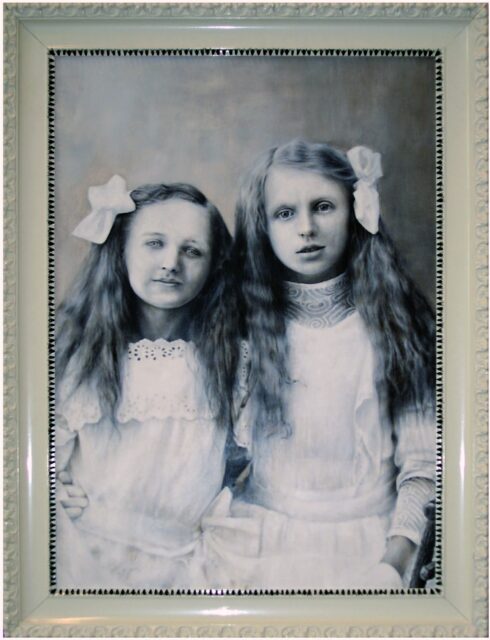
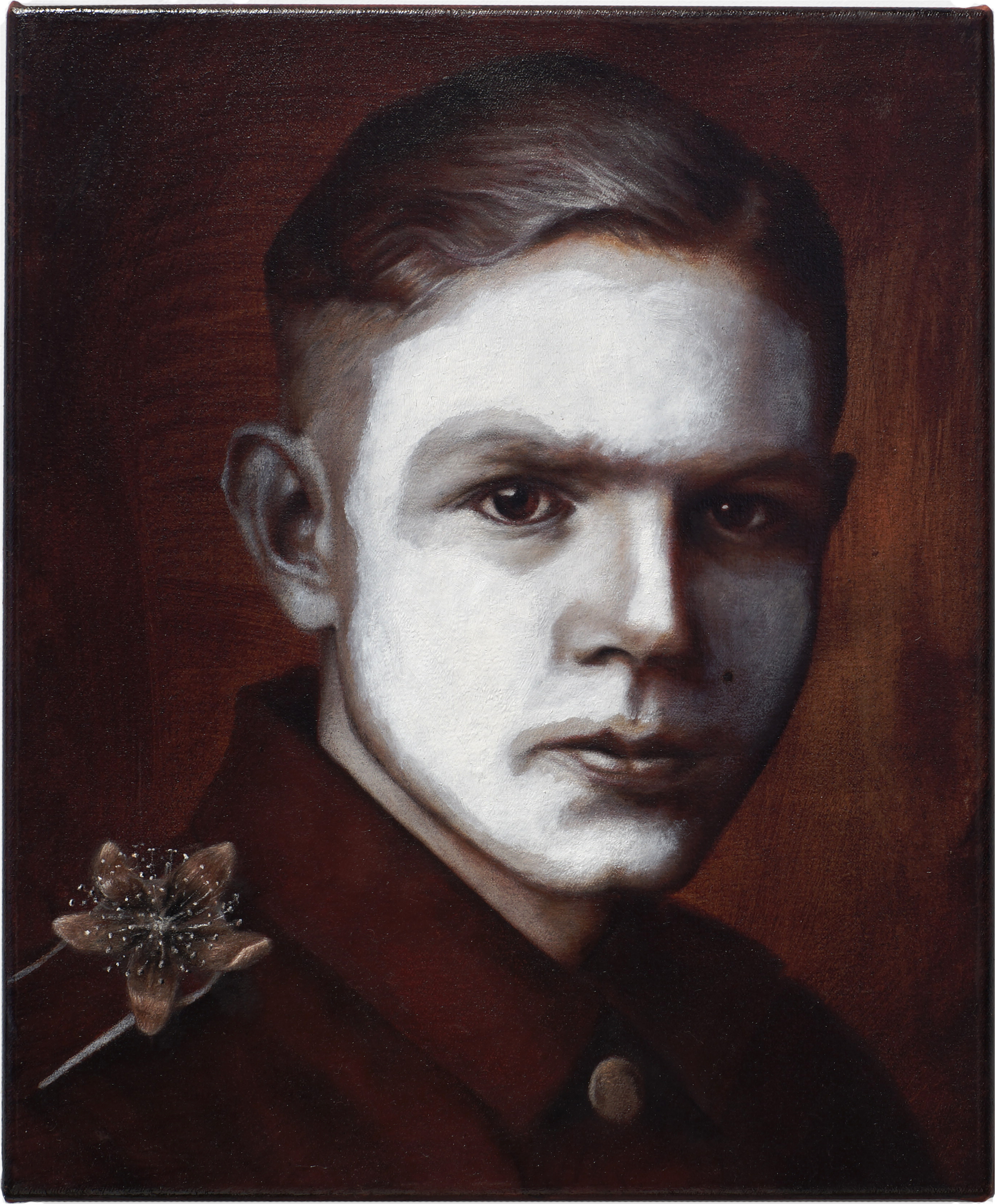
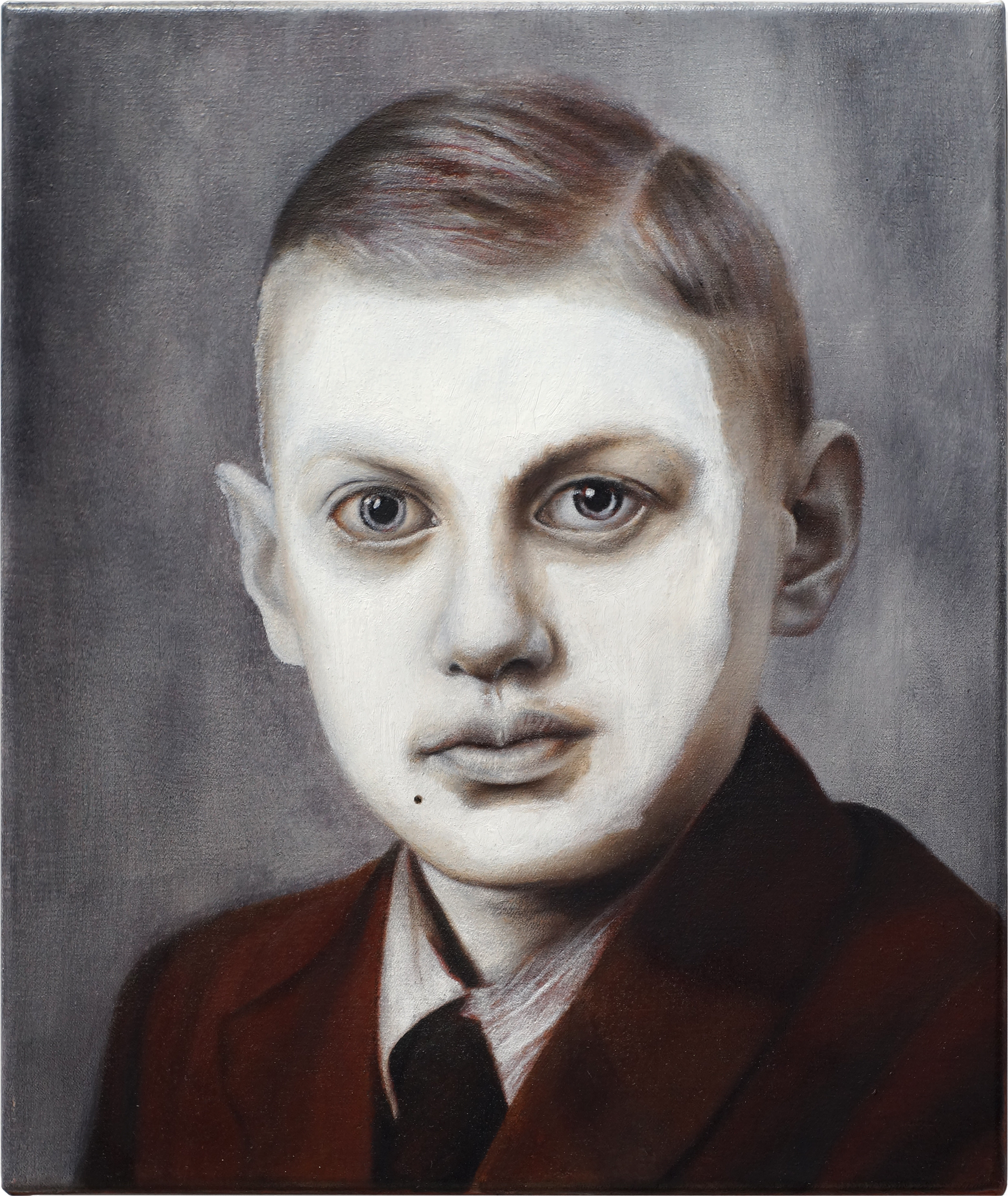
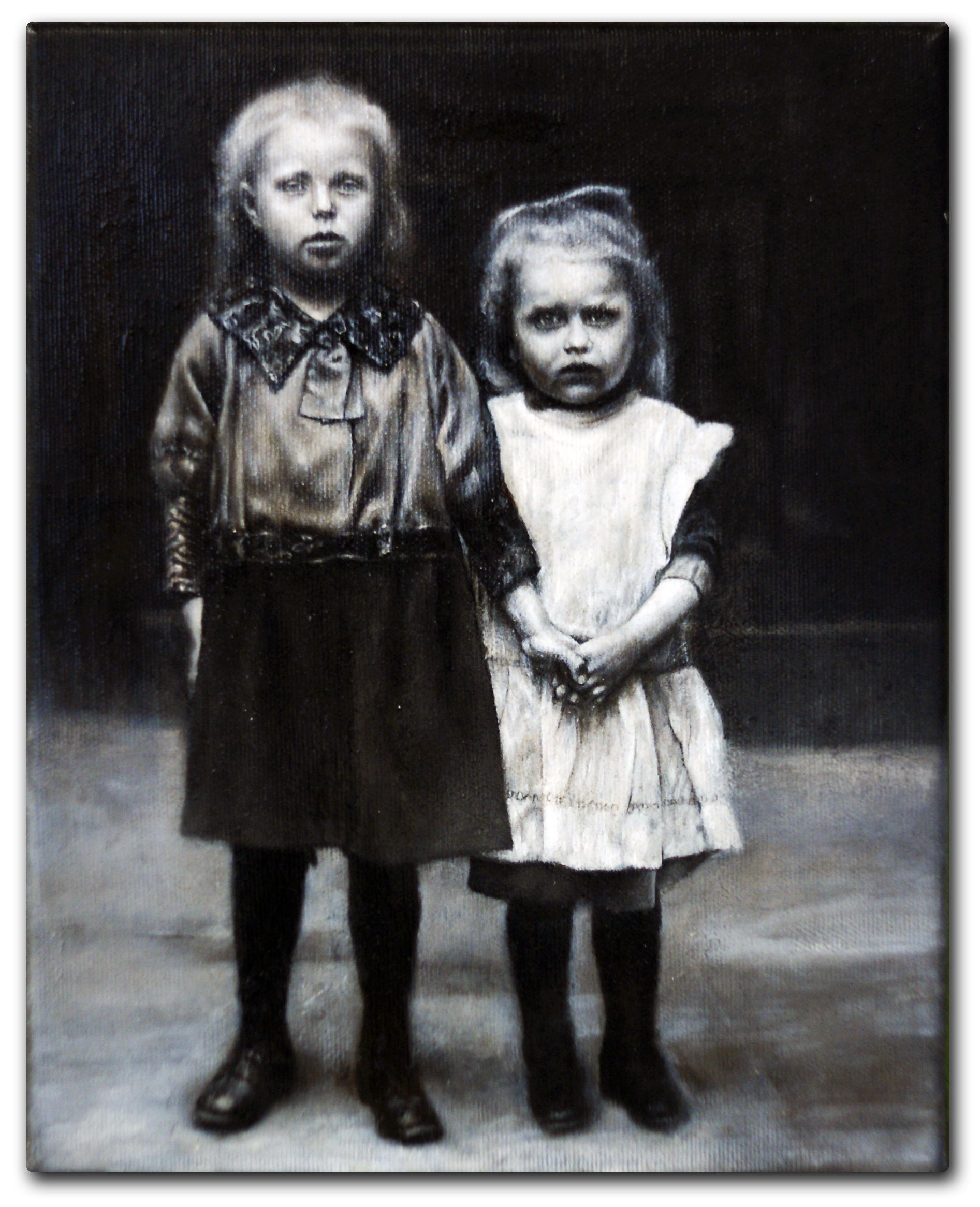
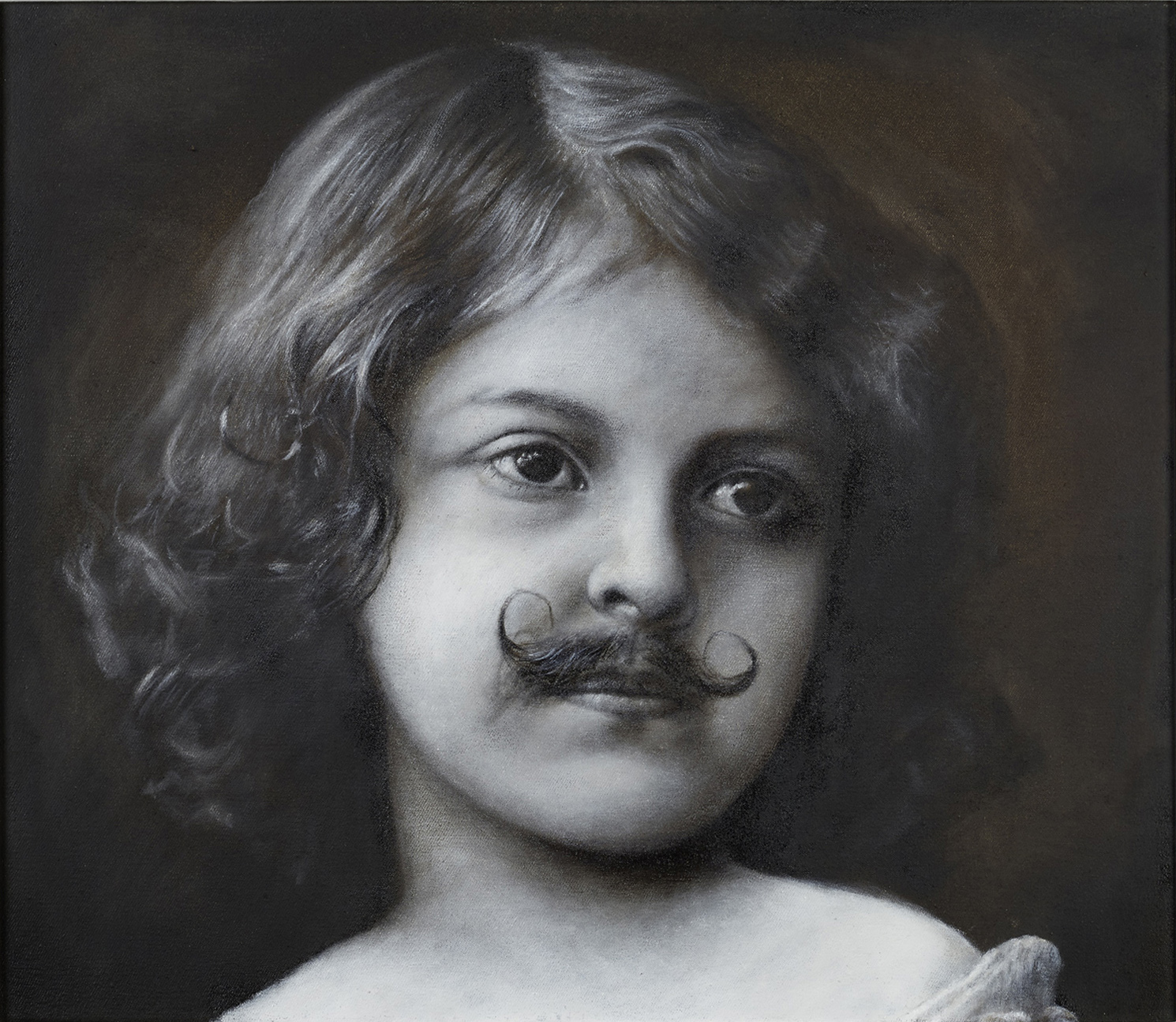
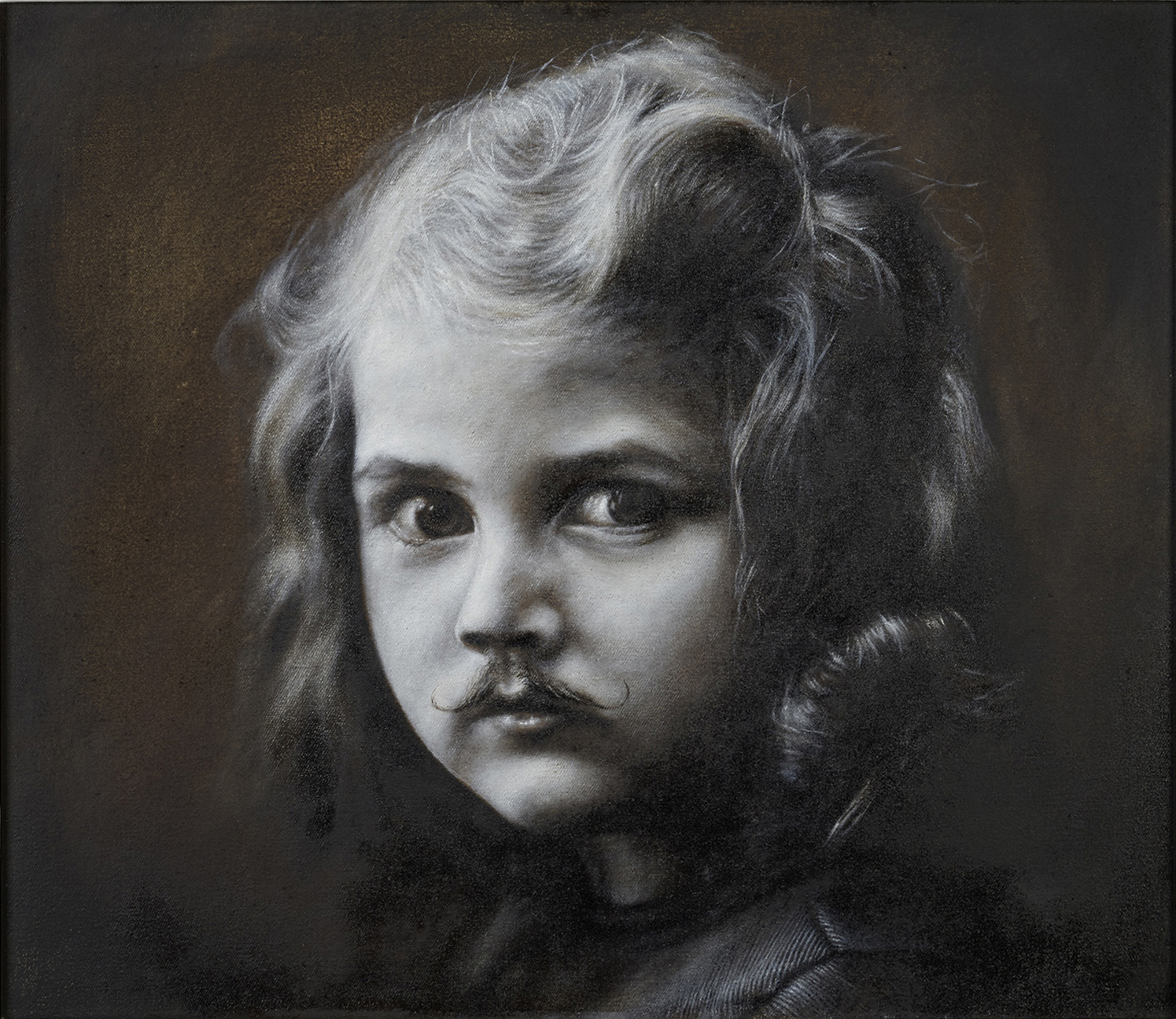
In terms of content, I am more on the darker, melancholic side. I’m less interested in the light or purely decorative and more into a kind of existential heaviness. Many motifs draw on old photographs, often children’s portraits. Figures from another time carry a particular tension, especially where innocence, memory, and transience intersect.
Stylistically, I find it difficult to place myself clearly. In painting, I work somewhere between an Old Master approach and something close to photorealism. For me, reality emerges through layers, density, and overlays — a principle that also appears in my objects.
I never set out to plan a fixed style. I often begin pieces in very different ways, give the process room, and trust that a personal signature will emerge in the end. Perhaps that’s why my work feels like an ongoing cabinet of curiosities: a collection of images and objects that seem to come from different eras yet follow the same inner logic.
As I’ve read, you studied painting and graphic arts. Was the “unusual” already your direction during your studies? Your current main subject or main medium is oil painting, correct? I find your portrait works particularly interesting. Your art often carries a socio‑political, critical background — for example the works BDM (Bearded German Girl), HJ (Handsome Boy), Ohne Tadel, Das letzte Mahl, or Schindluder. How do you develop your motifs? Feel free to tell us a bit about these works.
Yes, I studied painting and graphic arts at the HGB Leipzig and later completed my master class studies at the HfBK Dresden. Early on during my studies, I realized that I was drawn to fringe topics, the marginal, and even taboos. The ordinary or currently fashionable rarely appealed to me.
Oil painting remains my central medium to this day, because it allows for a depth and complexity I don’t find in any other technique. It requires time; it reacts to light, to proximity, and to patience.
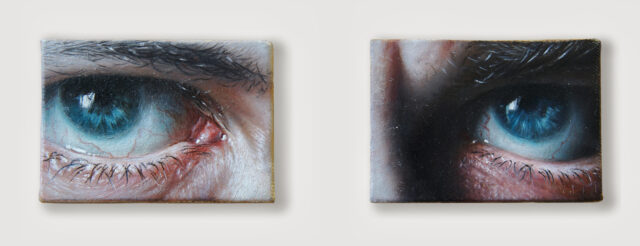
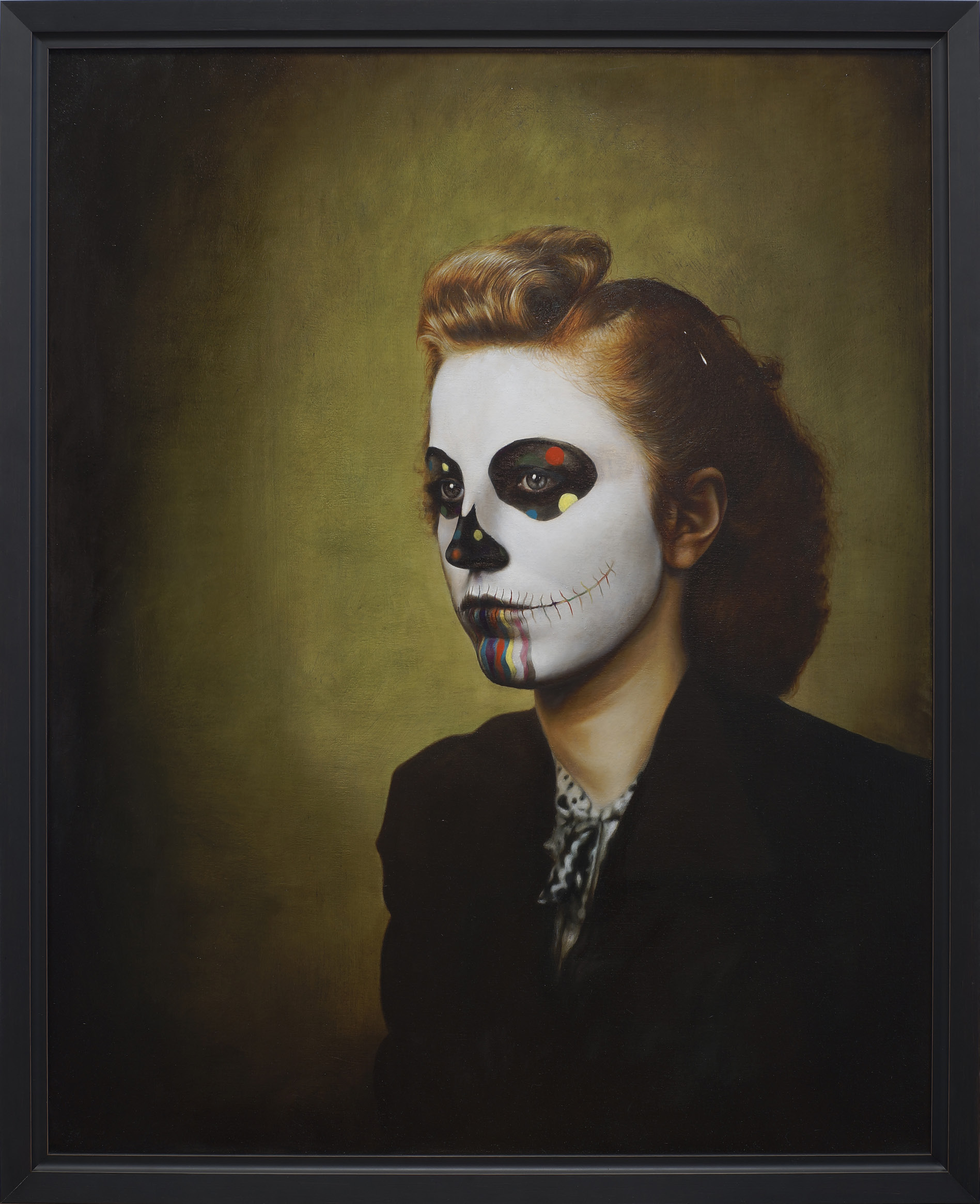
I’m especially drawn to people. Faces carry an incredible amount within them: memory, imprint, tension, and sometimes something unspoken. Painting a good portrait is one of the most intense tasks I know. When it succeeds, something emerges that is more than a mere depiction — almost something alive.
This becomes particularly tangible when you stand in front of a painting. With an oil painting, you quickly notice that it cannot truly be replaced. No photograph, no reproduction can capture that presence. It’s a bit like with a real person: you can depict them, but you have to stand in front of them to truly perceive them.
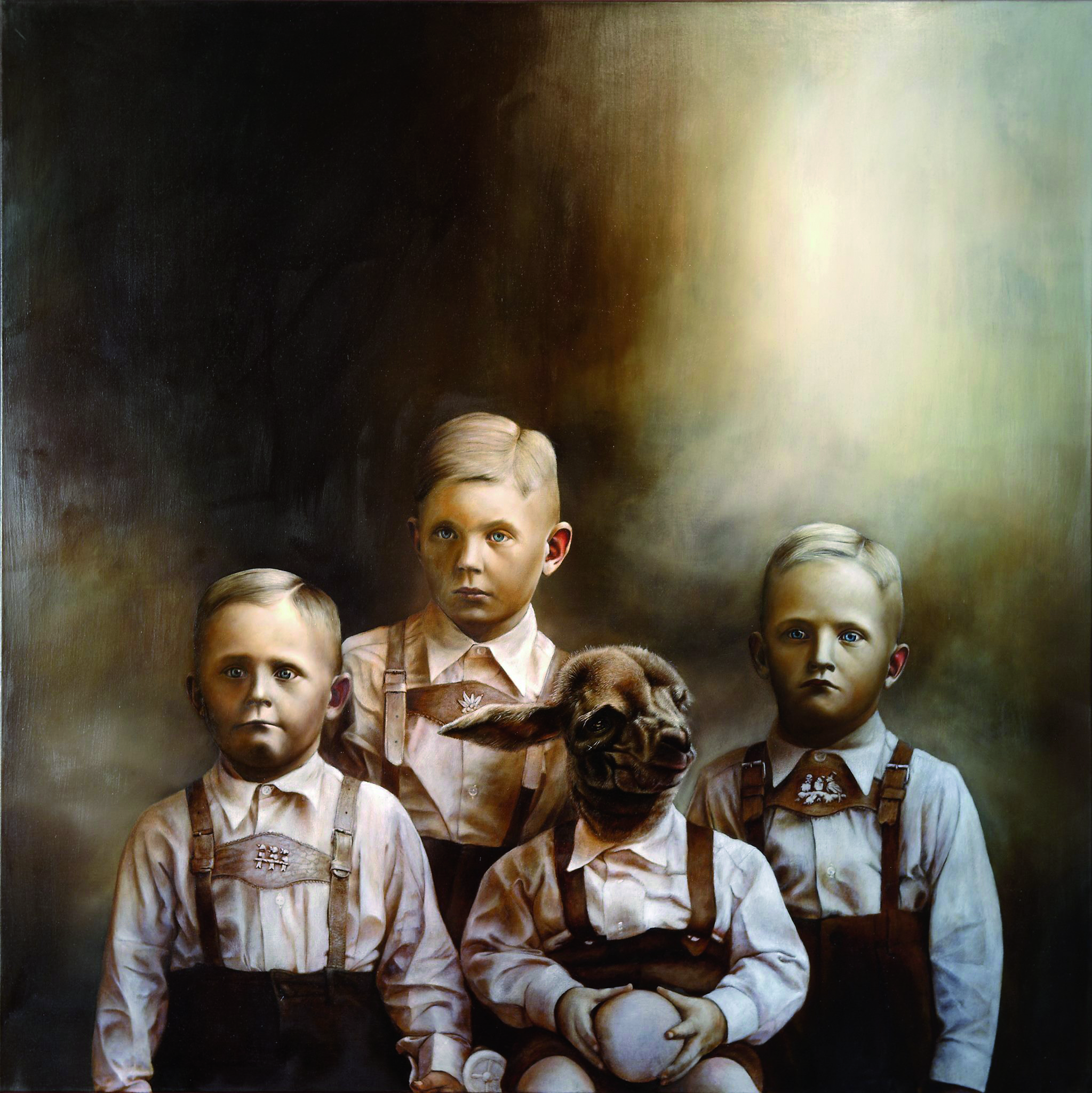
Many motifs arise from historical photographs, wordplay, or social observations. Series like BDM (Bearded German Girl) or HJ (Handsome Boy) work with ironic shifts within clearly historical references. I’m interested in how strongly images are shaped by expectations, gender roles, ideals, and projections. Engaging with texts like Klaus Theweleit’s Male Fantasies has certainly sharpened that perspective, though I’m not aiming for direct illustration.
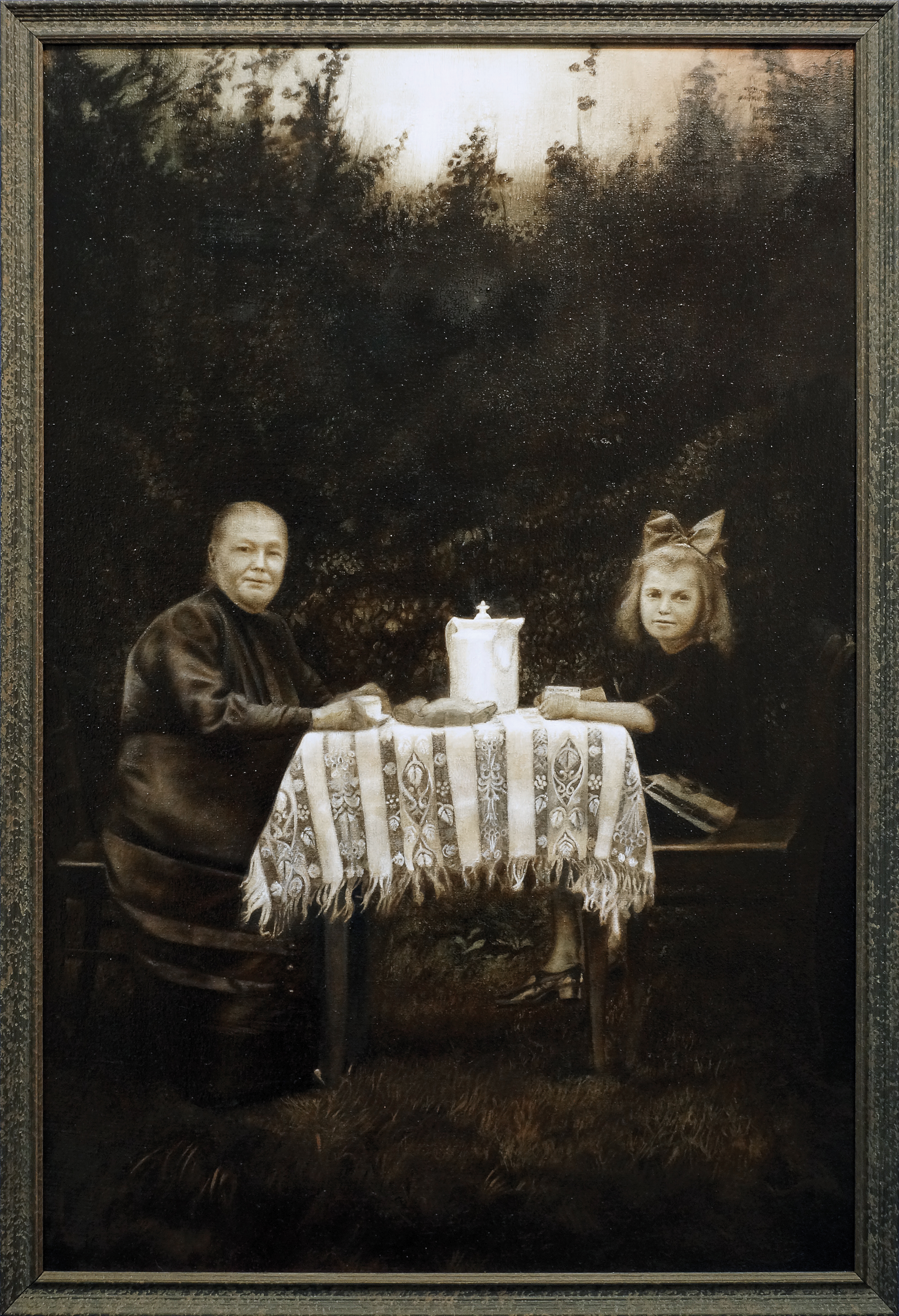
Other works are much quieter and more serious. Das letzte Mahl deals with farewell without explicitly naming it — a moment that, in retrospect, carries more weight than it seemed to at the time. Ohne Tadel and Schindluder draw on early photography, its strictness and its social discipline. Children who must perform, who must present themselves, who simultaneously develop something grotesque. Today, some of it may appear almost humorous, yet beneath the surface remains a sense of unease that interests me.
Is there a topic that is currently occupying your mind?
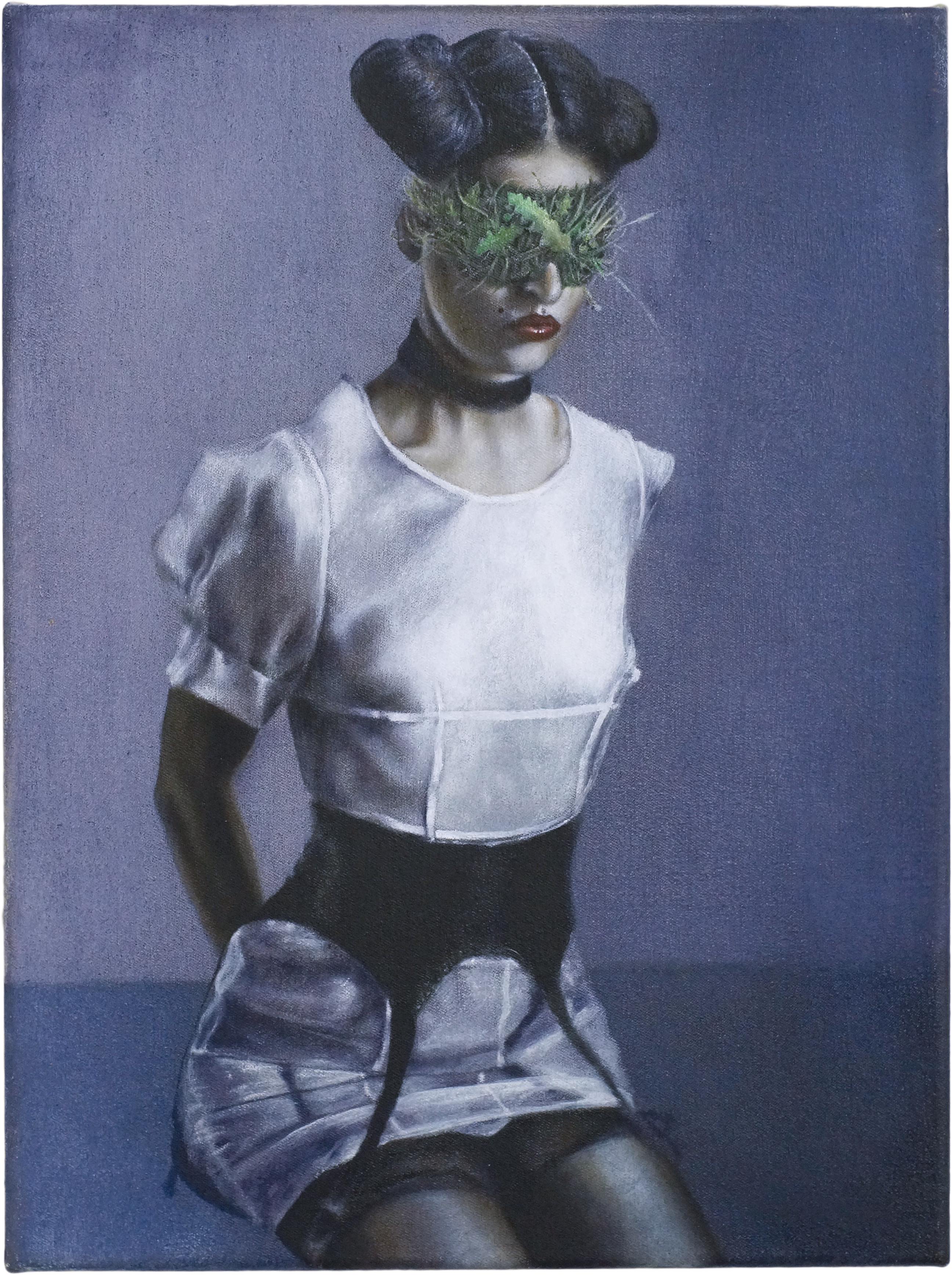
Yes, actually. At the moment, I’m working on Yggdrasil — a piece that feels almost like a new chapter for me. It moves between symbol, myth, and decay, a search for traces of what remains when forms, systems, and belief structures begin to crumble. The theme reappears in different forms: in paintings, sculptures, and also in objects involving flies. For me, it will be less of a finished work and more of a living experiment that emerges in various forms and raises questions.
You work with different media and, as I’ve noticed, you have a fascination for macabre things. What was your intention behind the artworks and objects made from flies? Some people might consider them disgusting, questionable, or absurd. How does one arrive at insects as a medium? Is there an experience or symbolism behind it, or does it have a religious meaning? There are many interpretations of the “fly in art.” Or did you simply want to give supposedly repulsive things a sense of “beauty” and acceptance?
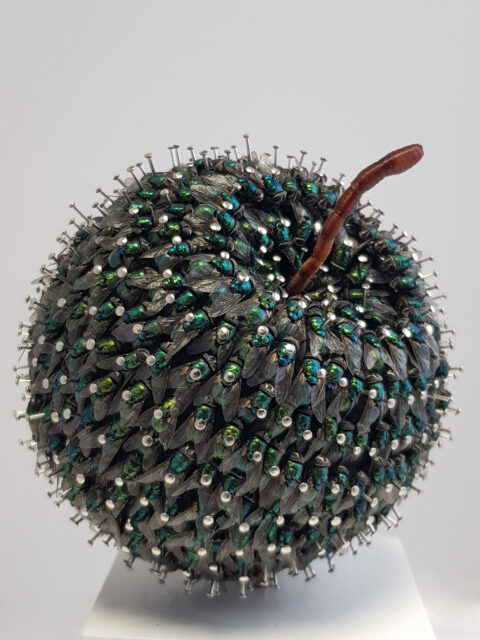
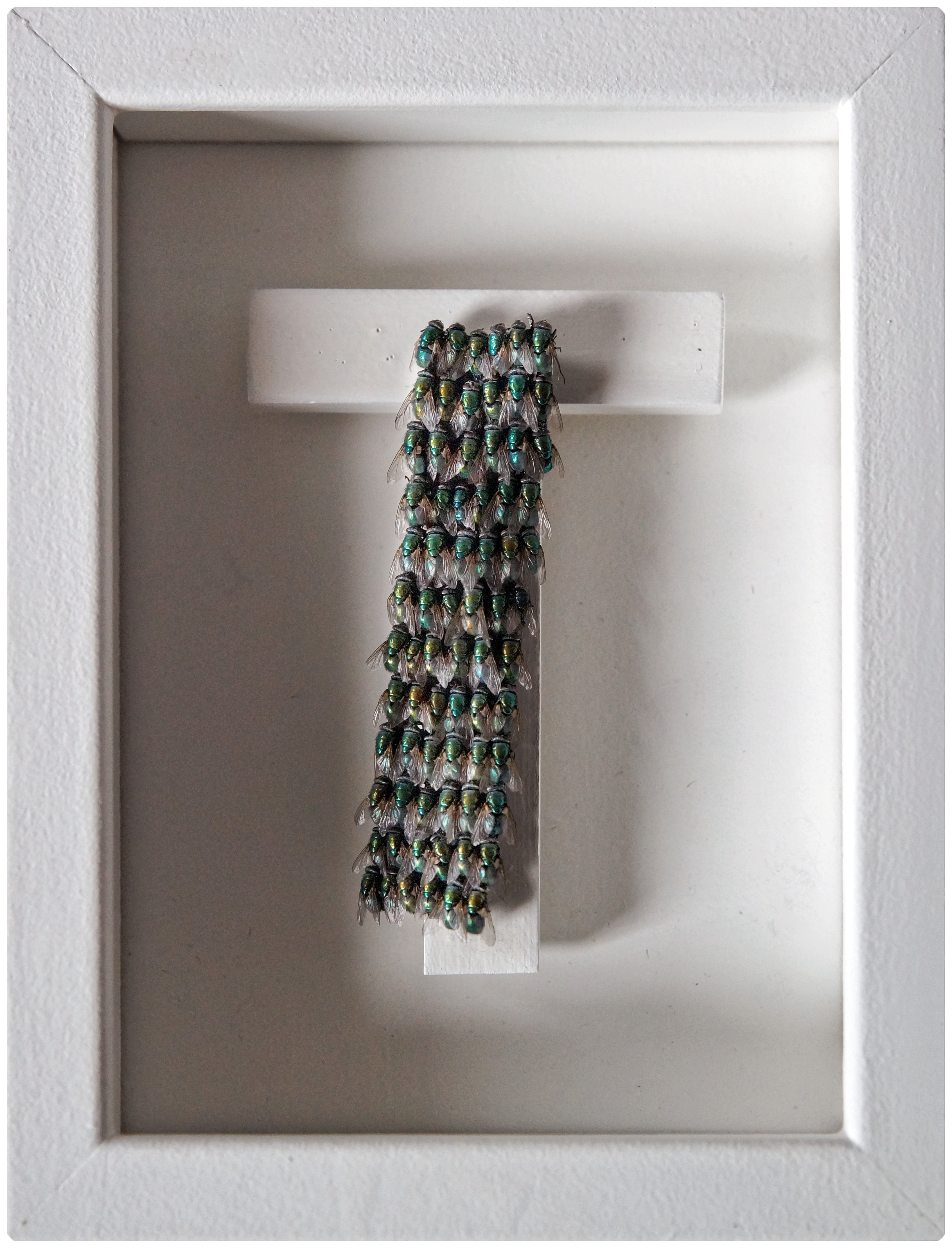
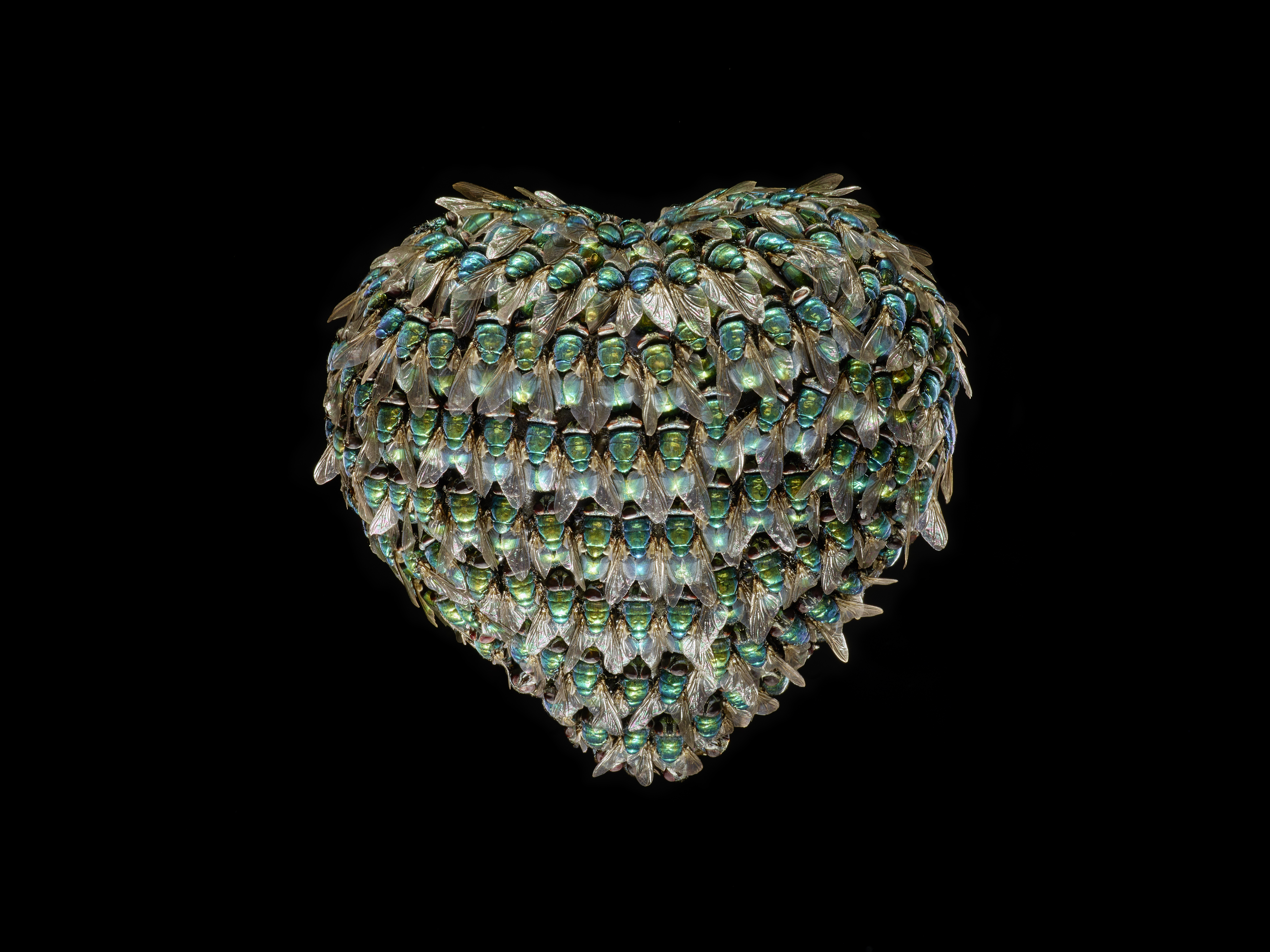
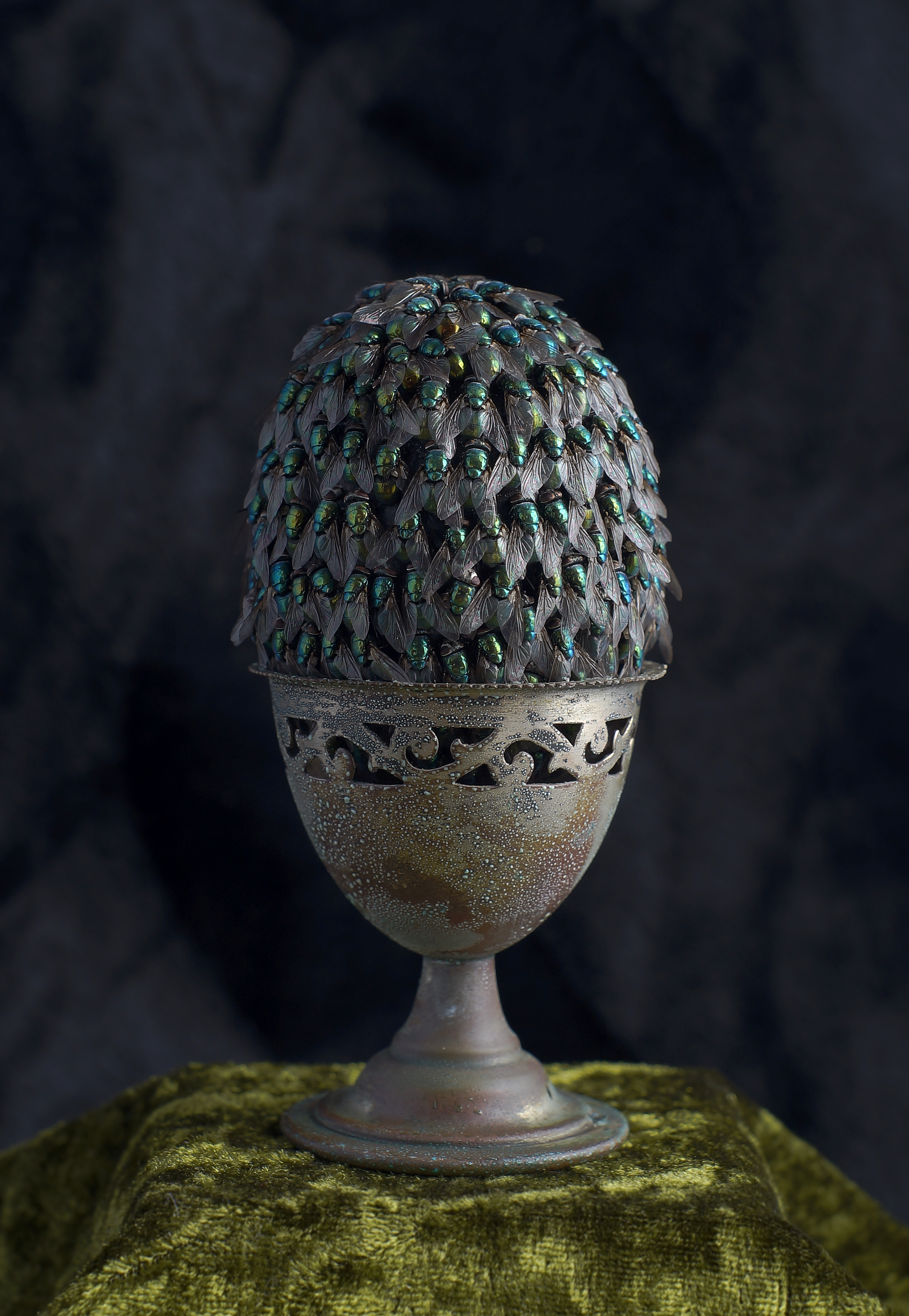
Flies attract me because they unite opposites within themselves. They stand for decay and mortality, yet they possess a fragile beauty that only becomes visible when you look closely. Their wings are almost ornamental; in the light they shimmer like something precious — a contradiction I can’t let go of.
As a motif, flies move between death and persistence. They are omnipresent, resilient, nearly impossible to eradicate. In my objects, the goal is not to soften what is repulsive, but to give it space — a space where beauty, irritation, and meaning can be felt simultaneously.
What many people might be wondering at this point: How long does it take to collect that many flies?
I think that would completely blow my time frame. I don’t collect the flies by chance — I breed them myself. What’s important to me: I never kill them. I feed them until they die a natural death. The longer they live and the more light they receive, the more intense their colors become. They live in a spacious wooden structure covered with fly mesh — more of a small habitat than a cage — in my studio. I enjoy observing them, although I’m not always sure who is watching whom.
(Editor’s note: Wow!)
You’ve also experimented with “artificial intelligence.” I’m thinking of works like Melancholy of Darkness or Mirror Images of the Self. Is this a new artistic direction or a form of self‑reflection?
Yes, I think you can definitely see it as a form of self‑reflection. For me, working with AI is less a new artistic path and more an experimental field. I use it to bring together thoughts, philosophical and religious questions, biographical elements, and utopian ideas within a shared visual language.
The images that emerge don’t stand on their own the way my analogue works do. They function more like illustrations within a larger process of thinking and writing. I’m interested in how the AI recognizes connections and interactions between these different layers, recombines them, and reflects my own thoughts back to me from a kind of meta‑level.
In a way, it’s an attempt to organize or restructure my own ideas — and perhaps make aspects visible that I wasn’t aware of before.
One challenge is finding a healthy balance between public life, the art world, and private space. Is there still time for hobbies?
My daily life is highly structured, not least because of my children. That grounds many things quite naturally. Art is not a clearly separated area that exists somewhere beside life — it’s something that runs continuously in the background. I jot down ideas all the time, whether I’m in the studio or not.
Time for classic hobbies in the narrower sense is limited, but making music still plays an important role and can sometimes be integrated into my work quite well. Sports are part of it too, mainly to clear my head.
In the art world, I’m probably less present today than I used to be. That’s mainly because I spend more time in the studio than going from exhibition to exhibition. Sometimes I think I should show up more often — but at the moment, the studio is the place where the most is happening for me.
People see your work on social media and on your website. Are there new exhibitions planned?
In recent years, my focus shifted more toward the private sphere for a while, which naturally affected visibility and exhibitions. This phase was intentional and has now come to an end.
At the moment, I’m working continuously in the studio again. Several new works and groups of works are in progress or close to completion. Some of them are deliberately not shown online yet, because I want to see them in an exhibition context first.
Thank you very much, Nils!
My pleasure. Thank you for the conversation, Dani.
Links:
www.nilsfranke.com
www.instagram.com/niiilsfranke
www.instagram.com/niiilsfranke_ai
More articles on art and photography at Dark‑Art can be found here:
- Interview mit dem Fotografen und Künstler Sebastian Freitag
- Interview mit dem Skulpteur Marcel Poweleit („Alienmanufaktur“)
- Interview mit dem bildenden Künstler Nils Franke „Goldfliege“
- Interview mit dem Musiker und Liedermacher Eric Fish (Eric Fish & Friends)
- Interview mit dem Künstler Toby Bohne
- Interview mit der Künstlerin Christina Bauer
- Interview mit der Kostüm- und Make-up-Designerin Siri Blechner
- Adventskalender: Dark Art – gruseliger Horror oder ästhetische Kunst? Part III
- Adventskalender: Dark Art – gruseliger Horror oder ästhetische Kunst? Part II
- Interview mit dem Scrap-Art-Künstler Richard Barten
Antworten